Platelet-rich plasma, or PRP, is prepared from a sample of your own blood and injected into a targeted joint, tendon, ligament or other musculoskeletal structure. Every PRP injection at TPL is performed by a qualified medical provider using ultrasound guidance for accurate placement.
PRP is prepared by concentrating platelets from a sample of the patient’s own blood. It may be considered as part of a physician-directed treatment plan for certain joint, tendon, ligament and other musculoskeletal conditions.

PRP may be considered for certain joint conditions, including knee, hip and shoulder osteoarthritis.

Common applications may include tennis or golfer’s elbow, Achilles tendinopathy, patellar tendinopathy and selected rotator cuff conditions.
PRP may be considered for selected ligament injuries, overuse conditions and other musculoskeletal injuries based on clinical findings.
An evaluation can help determine whether PRP or another treatment option may be appropriate for your condition. Common conditions evaluated include:
Each patient is evaluated before treatment to confirm the diagnosis, review available options and determine whether PRP is clinically appropriate.
A medical provider reviews your symptoms, history, examination findings and relevant imaging.
A sample of your blood is collected and processed to prepare the platelet-rich plasma.
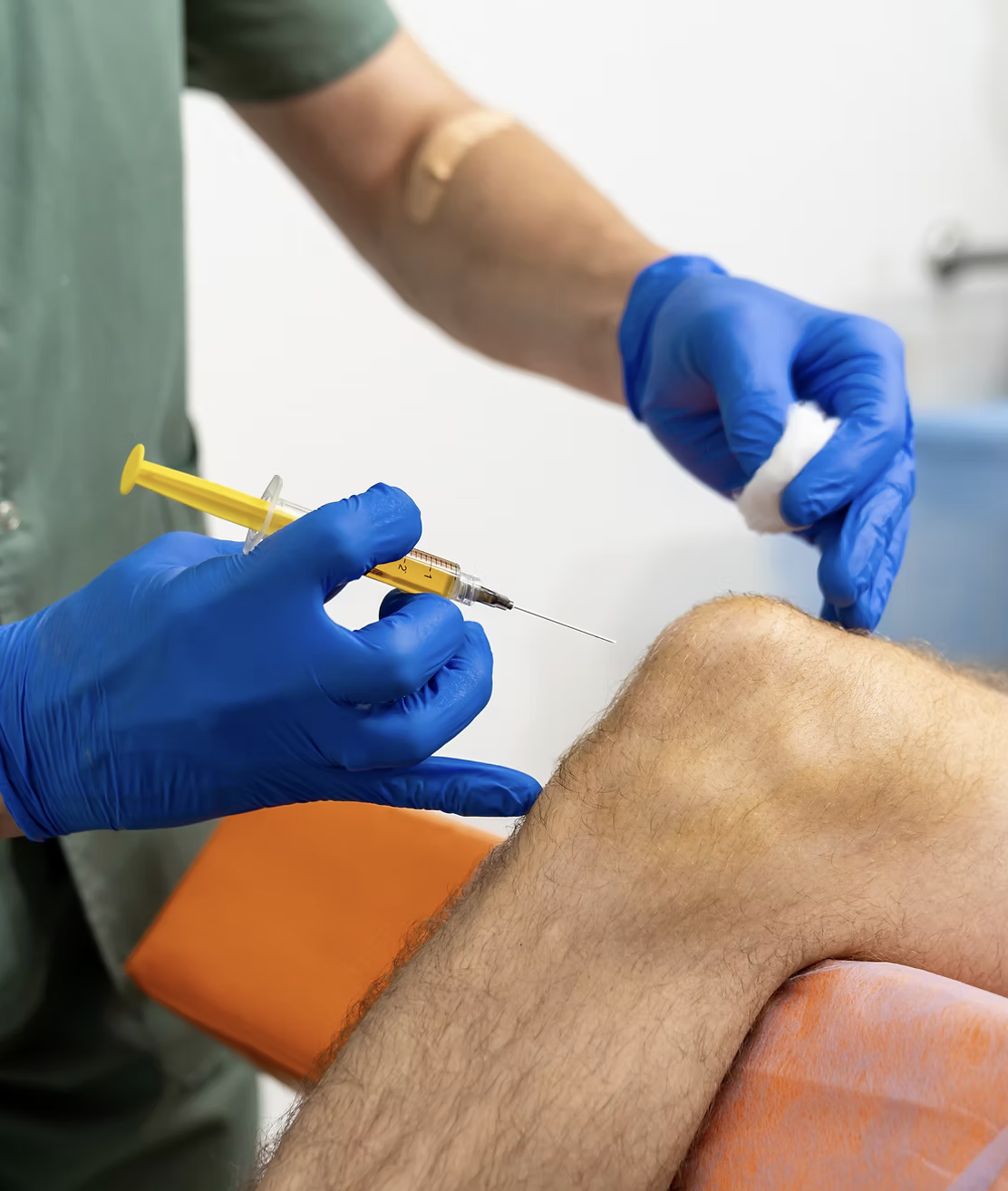
PRP is injected into the targeted area using ultrasound guidance for accurate placement.
Each PRP treatment includes a follow-up visit, which may be completed in person or through telehealth based on clinical need and patient preference. Activity recommendations and rehabilitation may also be coordinated as indicated.
Transparent, all-inclusive pricing — physician consultation, your treatment, and a follow-up if needed.
The number of treatments varies based on the condition, its severity and the patient’s response. A medical provider will recommend an individualized plan following evaluation.
Patients may experience discomfort during the injection and temporary soreness afterward. The treatment team will explain what to expect and provide individualized post-procedure instructions.
Response time varies by condition and individual. Improvement, when it occurs, may develop gradually over several weeks or months.
PRP is commonly offered as a self-pay service because many insurance plans do not cover it. Our team can review current pricing before treatment.